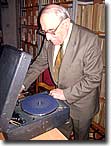
Naum Grigoryevich Shafer lives in Pavlodar. He is a wonderful person, dedicated to "her majesty" music. He made lots of efforts to establish a museum of gramophone records and now people in Pavlodar can see what has become a music history now. Naum Grigoryevich conducts research of unknown to the wide public musical events and generously shares his findings with everybody.
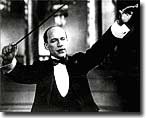 It is wide-known that Isaak Dunayevskiy made a breakthrough in the Russian everyday music but his Jewish melodies are very rarely performed. However, he made real masterpieces. For example, recitation of poetry based on Bible texts created in 1920 and translated by Abram Markovich Efros. It was successfully performed once, but after that the manuscript had never been used for the next 50 years. Only when Dunayevskiy’s 100-year birthday anniversary was celebrated, "Song of Songs" was performed by an instrumental quartet in the Russian Cultural Fund.
In the Bible text, a mutual passion of Solomon and Sulamif is the culmination of love, which is "as strong as death". Dunayevskiy, on the contrary, made the leading idea of this composition the unrequited love to Vera Leonidovna Yureneva, who was much older than the young composer. This noble music is authentically Jewish due to the fact that oriental "voices" are highly dramatic, thus making the "Song of Songs" sounding like synagogue prayers, similar to disconsolate crying in the prime of life.
 In the 20s, Dunayevskiy composes music for Karla Gutskova’s drama "Uriel Akosta". At the end of the 20s, the composer works in cooperation with a mobile Theater of Jewish Musical Drama based in Moscow at that time. For the first time Duayevskiy tries to compose music on Jewish texts (before he used translations only). Unfortunately, these works are not found yet, including the large operetta "Ganovim-trust" ("Thieves Trust"). Dunayevskiy was so much inspired by his work with the Jewish Theater that it influenced his following works. For example, for "Tarakanovshina" performance in the Moscow Satire Theater, he created an interesting number - "Going out fairy with a tractor" - a parody on a popular sailors dance "Yablochko", made as Jewish "Freilekhsa". This was a great manifestation of musical shrewdness! We would like to note that thanks to Lyubov Shashkova, a passionate promoter of Dunayevskiy’s music, this music was performed at the concert in honor of his 90th anniversary.
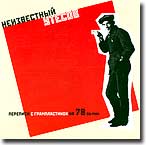 On January 16, 1931, in the Leningrad music hall, a premiere of Utesov’s "Jazz at the Turn of the Road" took place, where Dunayevskiy’s "Jewish Rhapsody" was performed for the first time. Violins, trumpet, trombones, saxophones, banjo, mixed with provincial Jewish melodies convinced listeners of the Jewish spiritual liberation. And listeners believed that they were liberated but, in fact, listeners were feeling very well a hidden sorrow of the composer. After the collapse of the Soviet Union, a full revived record of the "Jewish Rhapsody" was finally issued. It was done by Gleb Skorokhodov in 1993 when he was gathering material for a two-record album "Unknown Utesov". But in 1932, this music was recorded in two languages: Russian and Yiddish. The Jewish version, in pure Yiddish, is still not familiar to Leonid Utesov’s admirers.
People are used to think that Dunayevskiy’s musical career starts with the movie "Veselye Rebyata"("Cheerful Guys"). But in fact, his career started with his Jewish melodies composed for the movie "Pervyi Vzvod" ("First Platoon"), which was filmed in 1933 by Vladimir Korsh-Sablin.
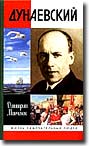 In 1936, Dunayevskiy composed two lullabies for Grigoriy Alexandrov’s movie "Tsirk" ("Circus") in 1936. Just remember, Soviet internationalists pass a black baby to each other and sing a lullaby, everybody in his own language: Russian, Ukrainian, Tatar, English, Georgian… Solomon Mikhailovich Mikhoels was singing in Yiddish: "Undert vegn do in land, ale far dir ofn…". This episode has a dramatic history. In 1948, Mikhoels was killed, while in 1953 this great artist was declared a "Jewish bourgeois nationalist". Very quickly his part of the "Lullaby" was deleated from all movies. Dunayevskiy was shocked. He died thinking that this loss was irreversible. But at the end of the 50s in Czechoslovakia, Film Director Grigoriy Alexandrov found the full copy of "Tsirk" in the Prague archive. And today Solomon Mikhailovich sings again on the screen that "all ways are open".
The ways are really open now and often Jews are leaving from the the country of Mikhaels and Dunayevskiy were born. However, it was time when Jews were coming here from all over the world in hope to find their "Jewish happiness". It is an old story. The most important work of Dunayevskiy in the field of Jewish music is about this idea - the movie "Iskately Schastya" ("Happiness Seekers").