|
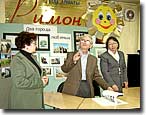
Alexander Iosifovich Golbraiht had completed a degree in microbiology, and is now an Honorary Scientist in the field of Biological Science. He is an erudite and a polyglot, and actively contributes to the activities of the Jewish community.
From his childhood, Alexander Golbraiht was interested in stamp collection. He was initially attracted to the activity in 1957, when the first stamps dedicated to space technology and exploration were released, and as a result, he became interested in cosmonautics. Alexander Iosifovich discovered many articles on the subject, information contained in which, however, was brief and fragmented. He decided to collate and systemise the located information. After seven years of hard work the Encyclopaedia on piloted cosmonautics was created and was presented yesterday in the Jewish Community Centre "Rimon".
 The book, containing 630 pages and more than 800 photographs, examines a number of subjects and would appeal to anyone interested in cosmonautics. It presents information about space launch pads and space stations, materials on preparation and flight of cosmonauts, facts about astronauts from various countries, various types of spacecraft, details about American flights to the Moon and other information.
After the author presented his book, he answered questions on many subjects.
One of the questions was, "Does USA or USSR have more astronauts?"
Alexander Golbraiht replied, "USA has more astronauts. They have 287, and there are only 72 in USSR, and another 26 in post-Soviet Russia. The last Soviet cosmonaut was Tohtar Aubakirov from Kazakhstan. But if you consider the number of hours spent in space, USSR is significantly ahead of America. None of American astronauts had spent more than seven days in space, whereas some of ours had stayed in space in excess of six months."
His concise and informative answers underline Alexander Iosifovich’s knowledge of the subject.
The author, Alexander Golbraiht, and Alma Kusherbaeva, the sponsor of the edition, hope that the book will shortly appear in schools and university libraries.
Dina Lyskovskaya |








