|
 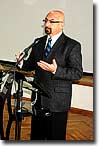 On October 28, in Almaty, in the Central State Archive of the Republic of Kazakhstan the Fifth International Scientific Historic Conference "Evacuation - Resurrecting the Past" took place. The conference was held in the landmark year of Kazakhstan’s presidency in the OSCE. On the eve of the conference there was a session of the People Assembly of Kazakhstan that noted the country’s progress in the development of interethnic and interfaith relations. A Member of the Council of People's Assembly of Kazakhstan, a Member of the General Council of EAJC, President of "Mitzvah" Association Alexander Baron was awarded with the highest award - the Golden Medal of the Assembly which the President of Kazakhstan Nursultan Nazarbayev personally handed to him.
Alexander Baron, the main initiator and unchanging chairman of the Conference, opened the session by noting the significant expansion of its "geography": the conference received 31 reports from 7 countries. The rector of the Central Asian University, a famous demographer, Academician Makash Tatimov said a welcoming speech. He noted the importance of the conference topics and their humanistic focus. 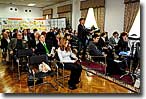 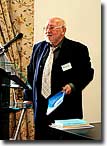 There were greetings from the Ambassador of Israel in Kazakhstan Israel Mei-Ami, a Representative of the sponsor - the American Jewish Joint Distribution Committee JDC Boris Boguslavsky, Doctor of Historical Sciences, Professor G. Kan, Professor Grigoryi Umanov, and Professor Alexandr Ginzburg. A well-known Historian, Professor Bolatbek Nasenov who had done a major research on the history of the Kazakh people, gave Alexandr Baron a newly published edition of a two-volume book devoted to Abylay Khan. There were greetings from the Ambassador of Israel in Kazakhstan Israel Mei-Ami, a Representative of the sponsor - the American Jewish Joint Distribution Committee JDC Boris Boguslavsky, Doctor of Historical Sciences, Professor G. Kan, Professor Grigoryi Umanov, and Professor Alexandr Ginzburg. A well-known Historian, Professor Bolatbek Nasenov who had done a major research on the history of the Kazakh people, gave Alexandr Baron a newly published edition of a two-volume book devoted to Abylay Khan.
The topics of the reports presented at the conference were devoted to two major subjects: the evacuation of population to Kazakhstan during the Second World War and the history of Jews in Kazakhstan. The Fifth Conference was marked by a high interest shown by Western researchers, including representatives from Israel and the US. The report of the Israeli Historian Dr. Zeev Levin suggested that the historiography of the evacuation of the population, including Jewish population, accepted in the West in the era of the Soviet Union, now needs revision. For example, until now there is no universally accepted answer to the question whether the Jews who suffered during the evacuation, relocation and repressions in the Soviet Union during the war, are victims of the Holocaust or not; the fate of various groups of evacuees is not traced, etc. The Historian has called for full cooperation of the researchers from Western countries and the former Soviet Union. 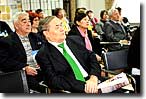 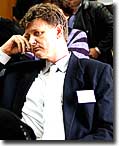 The call for uniting efforts of the researchers from different countries is very timely today in the era of globalization when many Jews from different countries, for example from Israel or the United States, are actively interested to discover the history of their relatives and friends during the war living in Kazakhstan. In addition to purely scientific there is a social interest and social order. The call for uniting efforts of the researchers from different countries is very timely today in the era of globalization when many Jews from different countries, for example from Israel or the United States, are actively interested to discover the history of their relatives and friends during the war living in Kazakhstan. In addition to purely scientific there is a social interest and social order.
These ideas were developed in the report of the University of Chicago graduate student Natalia Belskaya. She is currently collecting materials for his doctoral dissertation in the archives of Kazakhstan and Russia and plans to make a summary of publications related to the everyday life of Jews evacuated to Kazakhstan. What was the role the Jews played at the places where they had been evacuated, and how the period of evacuation affected their lives - these questions still need answers.
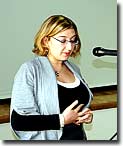 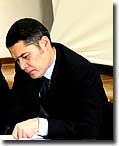 At the same time, many reports featured different significant aspects of the evacuation. For example, the Consul of the Ukraine in Kazakhstan, the Historian A. Protasova presented a detailed picture of the evacuation of industrial enterprises to Kazakhstan. The Expert from the Archive of the President of Kazakhstan, A. Zulkasheva analyzed data on the presence of Polish citizens on the territory of the Kazakh SSR in the years of 1940-1942. Employees of the archives E. Chilikova and Elena Gribanova devoted their reports to Jewish participation in the development of the defense industry and civil aviation in the USSR during the war. A number of reports of Kazakh researchers focused on identifying the place and role of Jews in the development of some regions of Kazakhstan. Director of the State Archive of the Karaganda Region J. Tursynova devoted her overview report to the role of the Jews who were senior officials in the Karaganda Region. Similar reviews were prepared by Mark Vitkin on the North-Kazakhstan Region, G. Madiyarova and G. Harkinbaev on Kyzylorda Region, B. Valieva on Pavlodar region. Of great interest was a well-illustrated report by the Head of Regional Studies Center of Ust-Kamenogorsk Nina Krutova "Monumentality of Jewish Tombstones." At the same time, many reports featured different significant aspects of the evacuation. For example, the Consul of the Ukraine in Kazakhstan, the Historian A. Protasova presented a detailed picture of the evacuation of industrial enterprises to Kazakhstan. The Expert from the Archive of the President of Kazakhstan, A. Zulkasheva analyzed data on the presence of Polish citizens on the territory of the Kazakh SSR in the years of 1940-1942. Employees of the archives E. Chilikova and Elena Gribanova devoted their reports to Jewish participation in the development of the defense industry and civil aviation in the USSR during the war. A number of reports of Kazakh researchers focused on identifying the place and role of Jews in the development of some regions of Kazakhstan. Director of the State Archive of the Karaganda Region J. Tursynova devoted her overview report to the role of the Jews who were senior officials in the Karaganda Region. Similar reviews were prepared by Mark Vitkin on the North-Kazakhstan Region, G. Madiyarova and G. Harkinbaev on Kyzylorda Region, B. Valieva on Pavlodar region. Of great interest was a well-illustrated report by the Head of Regional Studies Center of Ust-Kamenogorsk Nina Krutova "Monumentality of Jewish Tombstones."
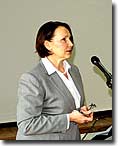 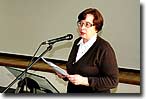 The third group of reports consisted of the reports devoted to personalities. Thus, the report by Alexandr Ginzburg was dedicated to Professor Belkin, report by A. Botanov - to the Artist A. Cherkassky, and report by S. Malikova - to Raisa Tsugel's life. The issue of repressions was revealed in the reports by Yuryi Reznikov (Pavlodar), Alexandr Abramovich and O. Berkun (Karaganda). In the latter report, the authors analyzed in detail the role of the Jews - Communist Party leaders - in the development of Karaganda Region in 1936-1938 at the very beginning of the region formation. The third group of reports consisted of the reports devoted to personalities. Thus, the report by Alexandr Ginzburg was dedicated to Professor Belkin, report by A. Botanov - to the Artist A. Cherkassky, and report by S. Malikova - to Raisa Tsugel's life. The issue of repressions was revealed in the reports by Yuryi Reznikov (Pavlodar), Alexandr Abramovich and O. Berkun (Karaganda). In the latter report, the authors analyzed in detail the role of the Jews - Communist Party leaders - in the development of Karaganda Region in 1936-1938 at the very beginning of the region formation.
At the end of Alexandr Baron said that the materials of the conference would be published soon as a separate publication, and in 2012 the next conference would be held.
Alexandr Abramovich
Photo by Oleg Belalov
|








